
Role Playing Game: What It Is and How to Choose One
A role playing game lets you control a character, build up their skills, and make choices that shape the story. Unlike arcade games or shooters, success here depends less on reflexes and more on decisions: dialogue, character growth, and moral trade-offs.
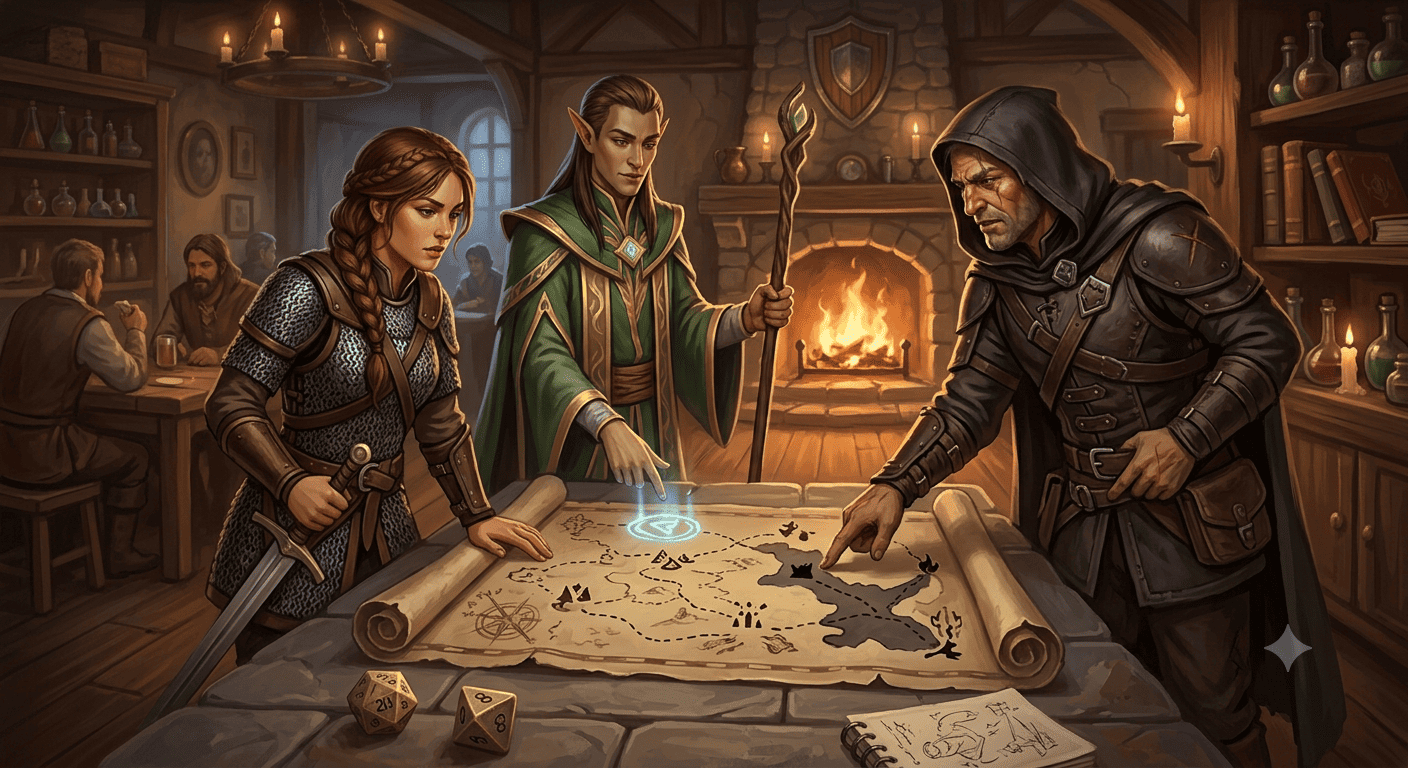
The term comes from tabletop games like Dungeons & Dragons, but today it's mostly linked to video games - from Baldur's Gate to The Witcher.
What Makes a Role Playing Game Different From Other Genres
In a role playing game, you step into a hero's shoes: a warrior, a mage, a mercenary, or a diplomat. The defining trait of the genre is a progression system - experience points, stats, skill trees.
The second trait is nonlinearity. In a strong RPG, the same quest can be solved through combat, stealth, or negotiation, and each path leads to a different outcome.
The third trait is a deep game world. Role playing games usually revolve around lore, factions, and side stories that aren't required to finish the game but add depth to the experience.
In Skyrim, for example, a player can ignore the main quest for years and simply explore locations, join guilds, and collect gear - and that's still a complete gameplay experience.
Where Role Playing Games Came From: From Tabletop to Screen
Tabletop Origins
The genre started in the 1970s with tabletop Dungeons & Dragons, where a game master described the world and players rolled dice to determine outcomes. That mechanic became the basis for combat systems in later video games.
The Move to Digital
Early computer RPGs (Wizardry, Ultima) brought the same principles to screens in the 1980s: turn-based combat, inventories, character progression. In the 1990s, Japanese studios added a stronger narrative focus, giving rise to the JRPG subgenre (Final Fantasy, Dragon Quest).
From the 2000s onward, the genre split into many directions: action-RPGs with real-time combat, MMOs with thousands of players sharing one world, and tactical RPGs with grid-based battles.
Types of Role Playing Games
Different RPG subgenres serve different needs - from slow-paced world exploration to competitive multiplayer. Here are the main ones:
| Subgenre | Key Feature | Examples |
|---|---|---|
| CRPG | Deep character building, turn-based or tactical combat | Baldur's Gate 3, Divinity: Original Sin 2 |
| JRPG | Strong narrative focus, anime-inspired style, turn-based battles | Final Fantasy VII, Persona 5 |
| Action-RPG | Real-time combat, fast-paced gameplay | The Witcher 3, Elden Ring |
| MMORPG | Open world shared by thousands of players online | World of Warcraft, Final Fantasy XIV |
| Tactical RPG | Turn-based battles on a grid map | Fire Emblem, XCOM |
How to Choose a Role Playing Game That Fits You
Picking the right role playing game depends on what matters most to you - story, combat system, or freedom of choice. A few pointers can help narrow it down.
- Enjoy reading dialogue and shaping the story - go for a CRPG like Disco Elysium or Baldur's Gate 3.
- Want fast-paced, real-time combat - pick an action-RPG such as Elden Ring.
- Playing with friends and looking for a long-term project - consider an MMORPG.
- Like planning tactics step by step - tactical RPGs are the best fit.
Time investment matters too: JRPGs and MMORPGs often demand dozens of hours per playthrough, while action-RPGs can usually be finished in 20–30 hours.
What Makes a Role Playing Game Engaging: Core Mechanics
A great role playing game rests on several mechanics that work together rather than in isolation.
- Progression system - the feeling of your character growing stronger with each mission.
- Branching dialogue - choices that genuinely affect how the story unfolds.
- Loot and economy - finding and trading items adds an extra layer of motivation.
- Factions and reputation - relationships with groups unlock or block certain quests.
- Open world - freedom to explore beyond the main storyline.
In Divinity: Original Sin 2, for instance, the same battle can be resolved through negotiation, stealth, or a direct assault - and the game reacts honestly to whichever path you choose.
Dive into the Legendary World of Heroes Adobe!
Are you looking for a truly deep text-based MMORPG where every decision, character progression, and live interaction matters?
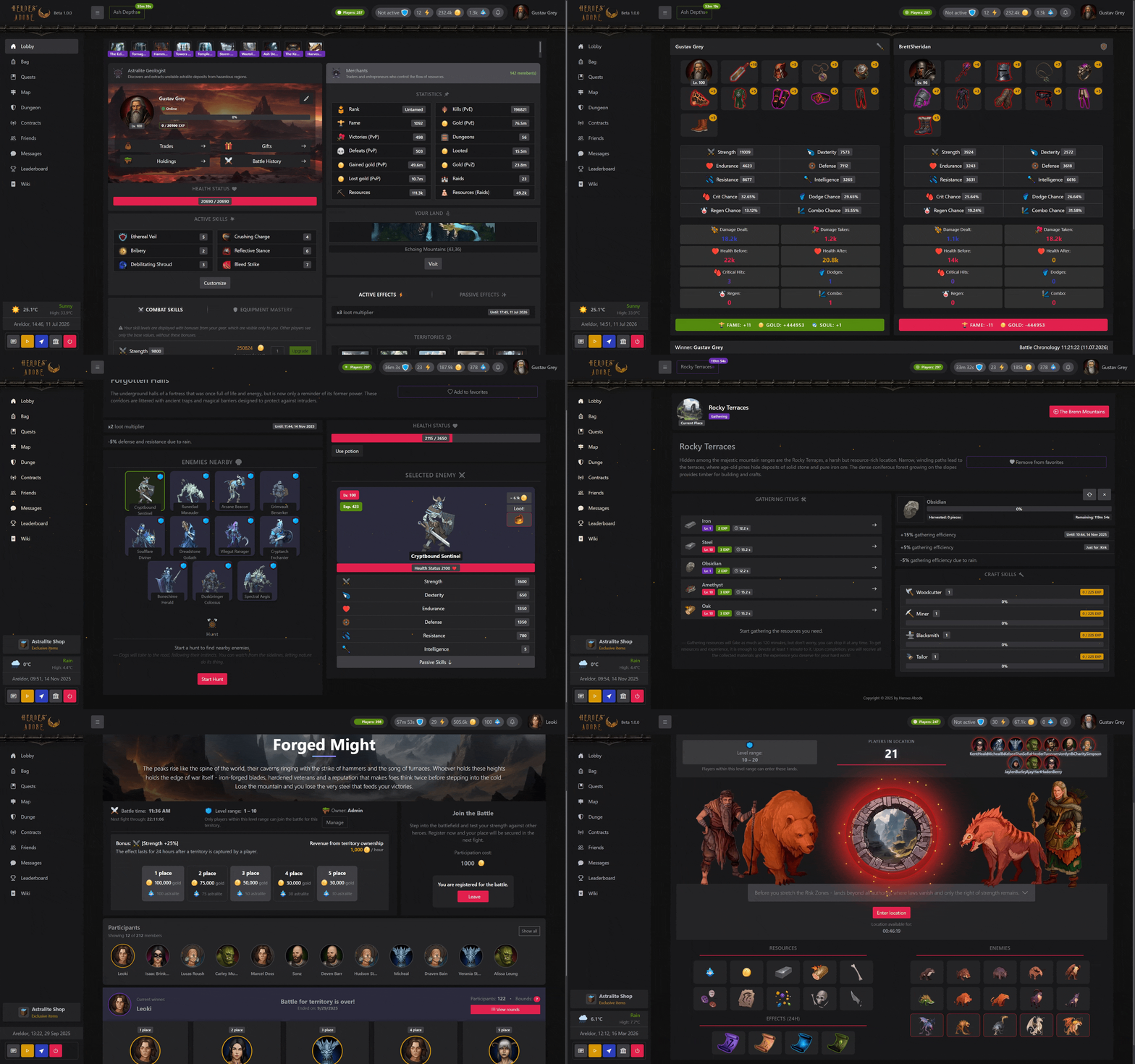
Immerse yourself in Heroes Adobe - an exciting browser-based role-playing game crafted for fans of classic adventures and a well-crafted fantasy world. An engaging journey full of unexpected twists and tactical possibilities awaits you.
 |
|
Become part of this captivating story right now. Head over to Heroes Adobe, create your hero, and start your journey to glory!
10 Best Role Playing Games to Start With
If you're not sure where to begin, here's a lineup of strong picks across different subgenres:
- Baldur's Gate 3 - the current benchmark for CRPGs, with a flexible combat system and near-total freedom of choice.
- The Witcher 3: Wild Hunt - an action-RPG with a rich story and a deeply detailed open world.
- Elden Ring - an action-RPG built around demanding combat and exploration of a bleak, sprawling world.
- Divinity: Original Sin 2 - a tactical CRPG with a well-crafted elemental combat system.
- Final Fantasy VII Remake - a JRPG classic reimagined with modern, fast-paced battles.
- Persona 5 Royal - a JRPG blending high-school life simulation with turn-based combat.
- Disco Elysium - a role playing game without combat, where dialogue and character stats drive everything.
- Skyrim - an open world for players who value exploration over a linear story.
- World of Warcraft - the most well-known MMORPG, backed by years of ongoing content.
- Fire Emblem: Three Houses - a tactical RPG with grid-based battles and a relationship system.
FAQ
How is a role playing game different from a regular arcade game? Arcade games reward reflexes and quick reactions, while a role playing game rewards strategic character growth and choices that shape the story and the world around it.
Which role playing game is best for a beginner? A solid starting point is The Witcher 3 or Baldur's Gate 3: both offer clear mechanics, a strong story, and gradual onboarding into their systems without overwhelming new players.
Can you play a role playing game without leveling up your character? Technically yes, but skipping progression makes the game significantly harder - most RPGs are balanced around the interplay between story and character growth.
What's the difference between an MMORPG and a single-player RPG? An MMORPG is built for constant online interaction with other players - guilds, raids, trading - while a single-player RPG focuses on a personal story built around one player.
Do you need prior knowledge to follow a role playing game's story? No, most modern role playing games ease players into their world gradually through tutorials and dialogue, without requiring familiarity with earlier entries in a series.