
Future MMORPG: What's Changing in Online Games Next
The future MMORPG is being built right now, at the crossroads of artificial intelligence, virtual reality, and decentralized economies. Players are tired of static worlds where NPCs repeat the same lines for years and progress boils down to grinding experience.
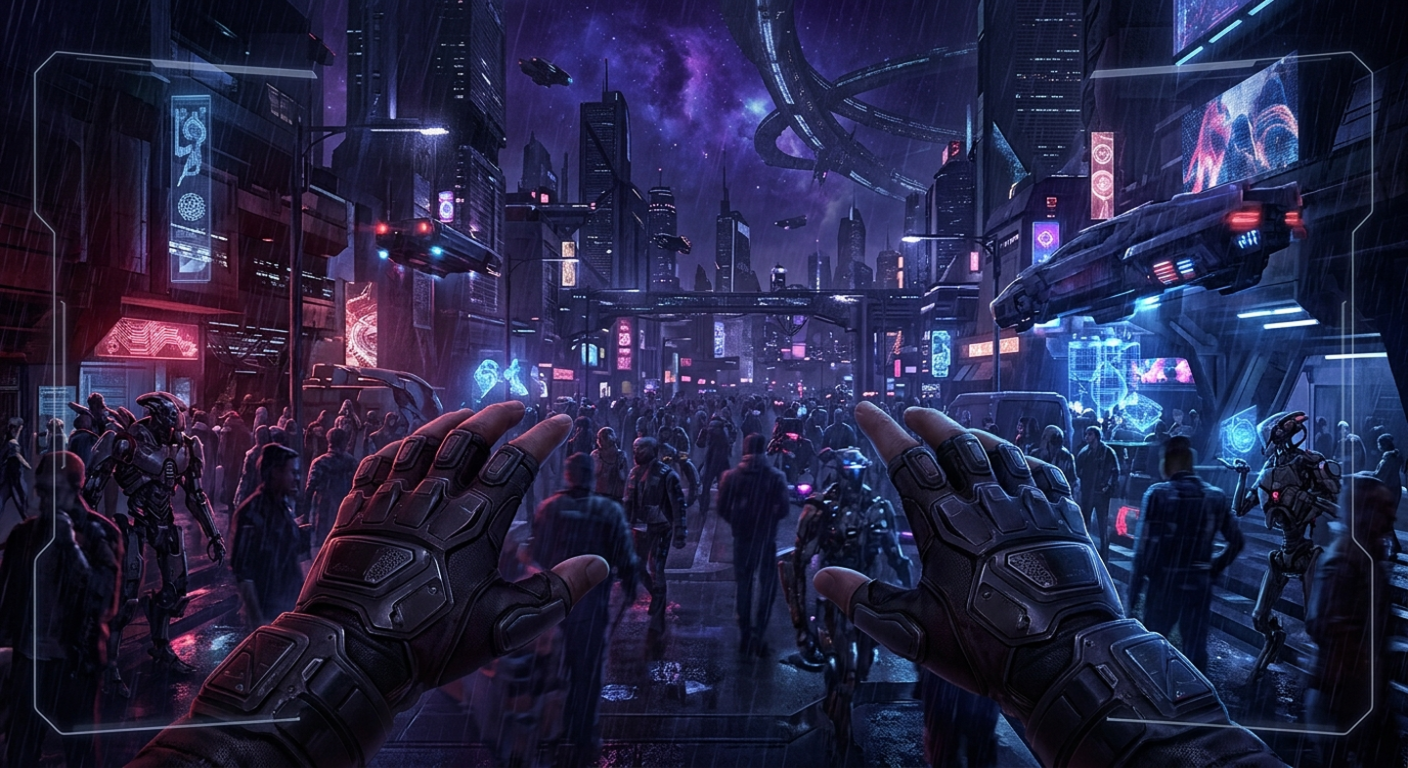
Studios are answering that demand with new technology. Below are the concrete directions already being tested in development studios that will define the genre over the next 3-5 years.
What's Coming for the MMORPG Genre
The classic "quest → grind → raid" formula is gradually giving way to living systems that react to player actions in real time.
Three major shifts stand out:
- The world stops being a backdrop and becomes an active participant in the story.
- In-game economies extend beyond a single server thanks to blockchain technology.
- Genre boundaries blur as MMORPGs absorb elements from shooters, simulators, and metaverse platforms.
Key Technologies Reshaping MMORPGs
AI-Powered NPCs
Generative AI already lets developers build non-player characters that remember conversations and change behavior based on a player's reputation. Instead of scripted lines, NPCs will hold unique conversations and make decisions on the fly.
A practical example: a merchant raises prices after a player previously cheated their guild - no scripted trigger, no developer intervention required.
Virtual and Augmented Reality
New-generation VR headsets cut latency and boost resolution, making hours-long immersion physically comfortable. AR elements, meanwhile, let players overlay game interfaces onto their real-world surroundings.
Blockchain and Player-Owned Economies
In-game items are increasingly tied to digital wallets, giving players genuine ownership of their gear. That shifts the very nature of crafting and trading inside virtual worlds.
New Monetization and Economic Models
Subscription-only pricing is gradually losing ground to hybrid schemes. Developers now combine:
- A base subscription for access to low-latency servers.
- Cosmetic monetization that doesn't affect game balance.
- Player-driven economies where value can be withdrawn through marketplaces.
This approach eases pressure on players while giving studios a stable revenue stream.
Social Systems in the Future MMORPG
A living world runs on players, not just on developer-made content. New guild systems let players influence the politics of entire map regions - from taxes to resource access.
Cross-platform play is becoming the standard: PC, consoles, and mobile devices increasingly share a single server instead of splitting the player base.
Today's MMORPGs vs. the Future MMORPG
| Parameter | MMORPGs Today | Future MMORPGs |
|---|---|---|
| NPC behavior | Scripted dialogue | AI agents with memory and goals |
| World | Static locations | Procedurally and physically simulated environments |
| Economy | Locked inside the server | Tied to blockchain assets and outside markets |
| Immersion | Monitor screen | VR/AR interfaces |
| Monetization | Subscription or one-off purchases | Hybrid models with play-to-earn elements |
| Server architecture | Sharding and queues at hotspots | A single seamless shard on cloud infrastructure |
| Character progression | Classes and levels | Class freedom and levelless mastery systems |
| Combat | Tab-target or partial action combat | Full action combat with physics |
| Social systems | Guilds as member lists | Guilds governing regional politics and territory |
| Cross-platform support | Separate servers per platform | One shared server for PC, console, and mobile |
Dive into the Legendary World of Heroes Adobe!
Are you looking for a truly deep text-based MMORPG where every decision, character progression, and live interaction matters?
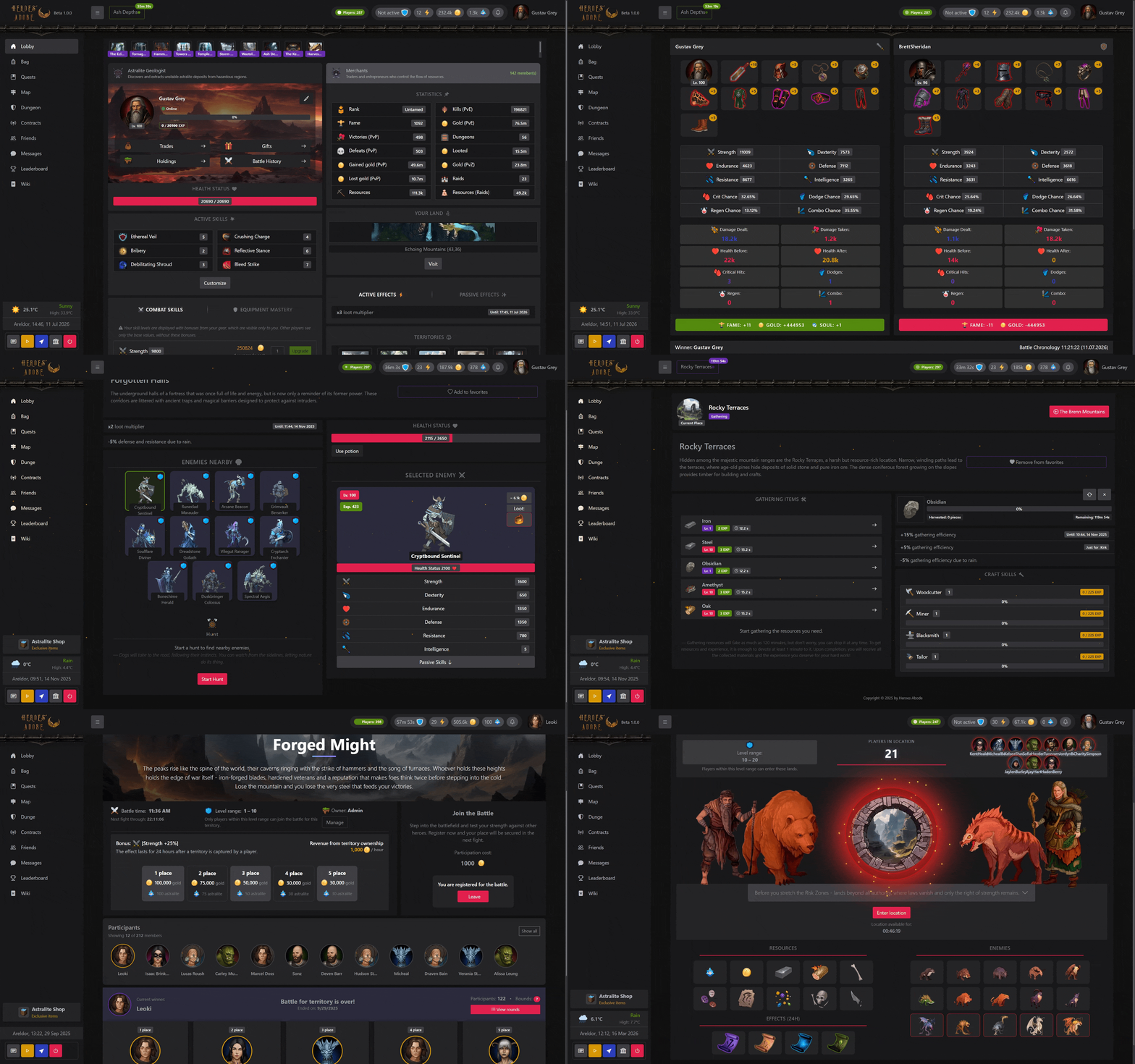
Immerse yourself in Heroes Adobe - an exciting browser-based role-playing game crafted for fans of classic adventures and a well-crafted fantasy world. An engaging journey full of unexpected twists and tactical possibilities awaits you.
 |
|
Become part of this captivating story right now. Head over to Heroes Adobe, create your hero, and start your journey to glory!
5 Games Already Showing the Future of MMORPGs
These titles are launching in late 2026 or are on track for 2027-2030, and they put the trends above into practice.
Stars Reach (Playable Worlds) - a sci-fantasy sandbox from Ultima Online creator Raph Koster. It entered Steam Early Access in summer 2026 and runs on seamless cloud architecture: rivers flow, forests burn, and planetary ecosystems shift based on player actions with no pre-written script behind them.
Epitome - a next-generation fantasy MMORPG where NPCs hold natural conversations, remember past encounters with a player, and adjust quests based on their choices. The developers stress this isn't an "AI-made game" - it's built by a traditional studio using AI to deepen world reactivity.
ArcheAge Chronicles - the sequel to the cult classic ArcheAge from XLGames, a seamless open world built around action combat. It's slated to launch on PC, Xbox Series S/X, and PlayStation 5 in the fourth quarter of 2026.
Chrono Odyssey - an MMORPG built around fast-paced action combat and time travel as a core mechanic. After reworking based on beta feedback, its release has moved to the first quarter of 2027.
Guild Wars on Unreal Engine 5 (ArenaNet) - a prequel rebuilt on a new engine. Public testing is planned for fall 2027 and should show how modern rendering technology transforms large-scale battles.
What these projects share is a rejection of the "finished" game world in favor of a constantly evolving, reactive system.
FAQ: Common Questions About the Future MMORPG
What will MMORPG gameplay look like in 5 years? Gameplay will shift toward dynamic events generated by AI based on community actions, rather than content scripted entirely in advance by developers.
Will AI replace human game designers? No. AI will take over routine tasks - NPC dialogue, economy balancing - while designers focus on storytelling and the overall vision of the world.
Will every MMORPG use VR? VR will stay an optional layer of immersion rather than a mandatory standard, since a large part of the audience still prefers a classic screen-based interface.
How will blockchain affect in-game economies? Blockchain will give players verifiable ownership of items and simplify cross-game trading, but it will need strong protections against speculation and fraud.
Will publisher-run servers become unnecessary? Partly, yes - decentralized worlds built on blockchain already let part of the game logic run without a central server operated by the publisher.