
Building MMORPG: Where to Start Your Game Development
Building MMORPG differs from single-player game development in one key way - thousands of players need to exist in a shared world at once, without lag or data loss. That single requirement shapes nearly every technical decision from day one.
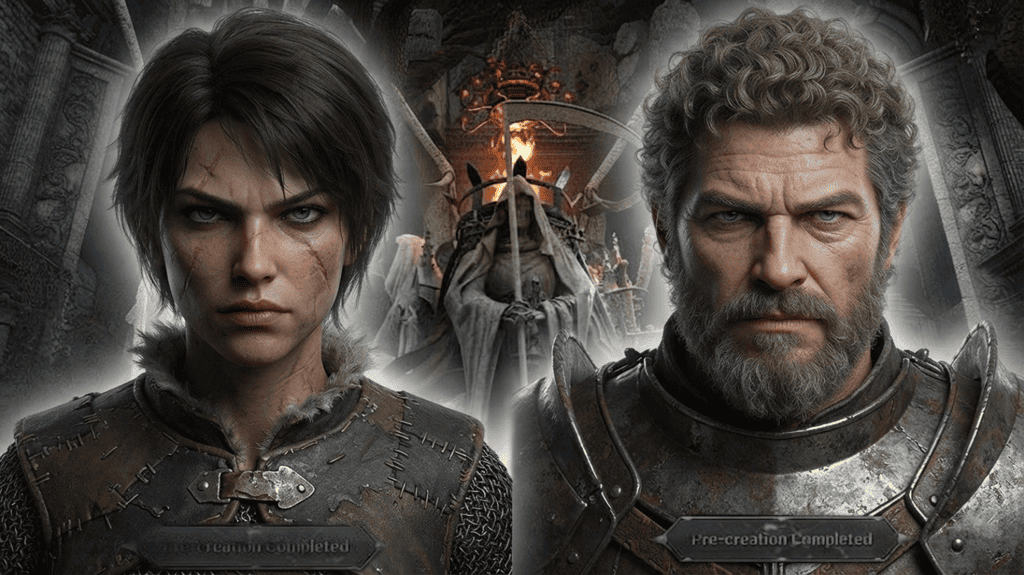
Below is a step-by-step breakdown of how MMORPG development actually works: from the design document to live servers and the first post-launch patch.
Why MMORPG Development Is Harder Than Regular Games
Unlike a single-player title, an MMO project needs a persistent server infrastructure running around the clock. The server has to process combat, economy, chat, and movement for hundreds of characters in real time.
Extra layers of complexity include:
- Synchronizing world state across every connected client.
- Preventing cheating and item duplication exploits.
- Balancing load during peak concurrent online.
- Long-term support - patches, live events, new content for years.
That's why a team building MMORPG is typically 3–5 times larger than one shipping a mobile or indie title of similar scope.
MMORPG Development Stages
Game Concept and Design Document
The first step is a GDD (Game Design Document) that locks down the setting, combat system, character progression, and monetization model. Skip this step and the team ends up reworking core mechanics indefinitely.
An MMORPG GDD should cover:
- Class system and leveling.
- Economy - currencies, crafting, player-to-player trading.
- PvP and PvE content: raids, arenas, open-world encounters.
- Social mechanics - guilds, chat, cooperative quests.
Choosing a Game Engine
The engine defines your graphics ceiling, networking code, and the tools your designers will actually use. For MMORPG development, visuals matter, but the built-in (or bolt-on) networking layer matters just as much.
Common engine choices for building MMORPG:
- Unreal Engine - strong out-of-the-box visuals, but the MMO networking layer needs significant custom work.
- Unity - flexible and backed by a large community, well suited to 2D and stylized 3D MMOs.
- Custom engine - used by major studios (World of Warcraft, Lineage 2) for full control over performance at scale.
Server Architecture
The server is the backbone of any MMORPG. Its architecture determines how many players can occupy the same location without frame drops or input lag.
Core approaches to MMO server design:
- Sharding - the world is split into duplicate instances (shards), each serving a limited player pool.
- Zoning - the map is divided into regions, each handled by a separate process.
- Seamless world - a single continuous map with no loading screens, requiring complex synchronization across server nodes.
Databases for inventory, progression, and transactions are usually built on PostgreSQL or MySQL, paired with Redis for caching fast-moving data like player positions and real-time combat state.
Client Side and Graphics
The client handles rendering, animation, UI, and client-side prediction - the technique that smooths out network latency. Solid prediction is what separates a responsive MMORPG from one that feels "jittery."
Technology Comparison for Building MMORPG
| Tool/Engine | Pros | Cons | Best For |
|---|---|---|---|
| Unreal Engine | Top-tier visuals, Blueprint scripting | Complex MMO networking layer to build out | Large studios targeting PC/console |
| Unity + Mirror/Photon | Fast setup, ready-made networking solutions | Limits when concurrent players per location grow large | Mid-sized teams, stylized MMOs |
| Custom engine | Full control, performance tuned to the project | Expensive and slow to build | Studios with an experienced technical director |
| Node.js/Go backend | Strong real-time performance | Requires a dedicated backend team | Projects prioritizing network stability |
| CryEngine/Lumberyard | Powerful graphics and physics out of the box | Small community, few ready-made MMO solutions | Studios prioritizing visual fidelity |
| Colyseus/SpatialOS (networking frameworks) | Built-in world sync and sharding tools | Paid tiers scale with online population, ecosystem lock-in | Teams without an experienced network engineer |
Budget and Team for MMORPG Development
A minimal team for an MMORPG prototype runs 8–12 people: a game designer, 2–3 client programmers, 1–2 server programmers, an artist, an animator, and a QA engineer. A full release typically needs 30–100+ specialists over several years.
Main cost categories:
- Team salaries - the largest share of the budget by far.
- Server capacity and hosting (scales directly with concurrent online).
- Engine licensing and third-party assets.
- Marketing and community support after launch.
Small studios often start with a closed alpha capped at 50–200 players to stress-test server load before investing in full-scale infrastructure.
Common Mistakes When Building MMORPG
- Underestimating server load - guessing capacity instead of running stress tests.
- Launching without an anti-cheat and anti-bot system in place.
- Scoping too large a world at launch instead of shipping an MVP with a single zone.
- Ignoring alpha-tester feedback before the full release.
- No post-launch content roadmap - an MMO lives on patches, not a one-time release.
FAQ: Common Questions About Building MMORPG
How long does it take to build an MMORPG? A prototype with core mechanics can come together in 6–12 months. A full project with an open world, economy, and PvE/PvP content usually takes 2–5 years, depending on scope and team size.
Can you build an MMORPG solo? Technically yes, but the scope - client, server, database, content - makes it extremely demanding. Solo developers more often build MMO-lite formats with a smaller per-location player cap.
Which engine is best for a beginner building an MMORPG? Unity with ready-made networking solutions like Photon or Mirror offers the fastest path to a working prototype, thanks to strong documentation and open networking examples.
How much does MMORPG server hosting cost? It scales with concurrent online: a small project with 100–500 players runs a few hundred dollars a month, while large projects with thousands of concurrent players can run tens of thousands monthly.
How do you protect an MMORPG from cheaters? A mix of server-side validation for every action (never trust the client), anti-cheat software, logging suspicious activity, and regular ban waves reduces the problem significantly, though it can't be eliminated entirely.